Traditional linseed oil soap made from Swedish linseed oil
For centuries, we have produced our paint, with linseed oil as a natural ingredient. We can now also offer FALUSÅPA as the result of a more sustainable production process in which a greater proportion of the flaxseed is put to good use. FALUSÅPA is a traditional linseed oil soap with natural cleaning power and caring properties. It cleans effectively in both cold and warm water and is gentle on surfaces as well as the environment. A pure natural product that is biodegradable.
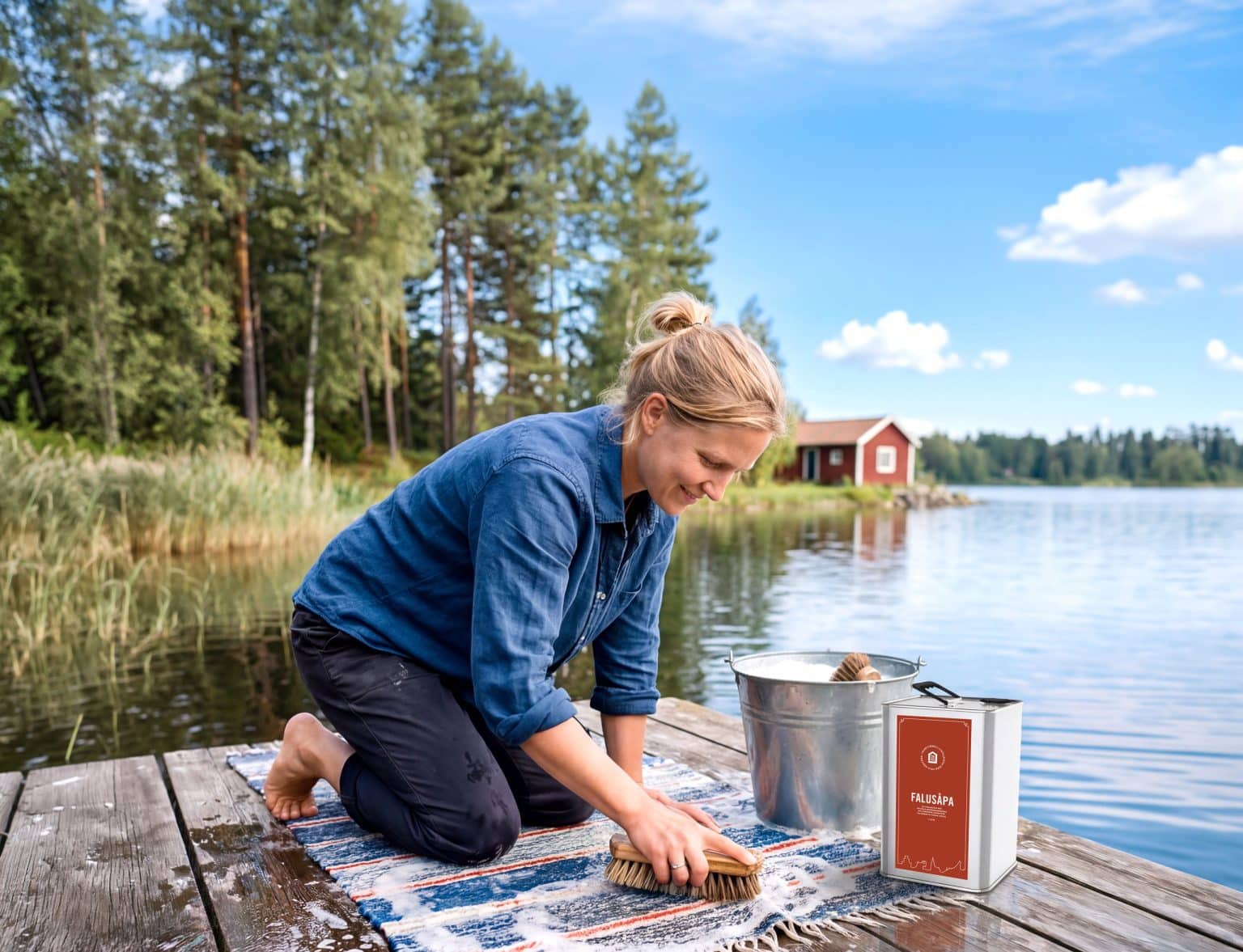
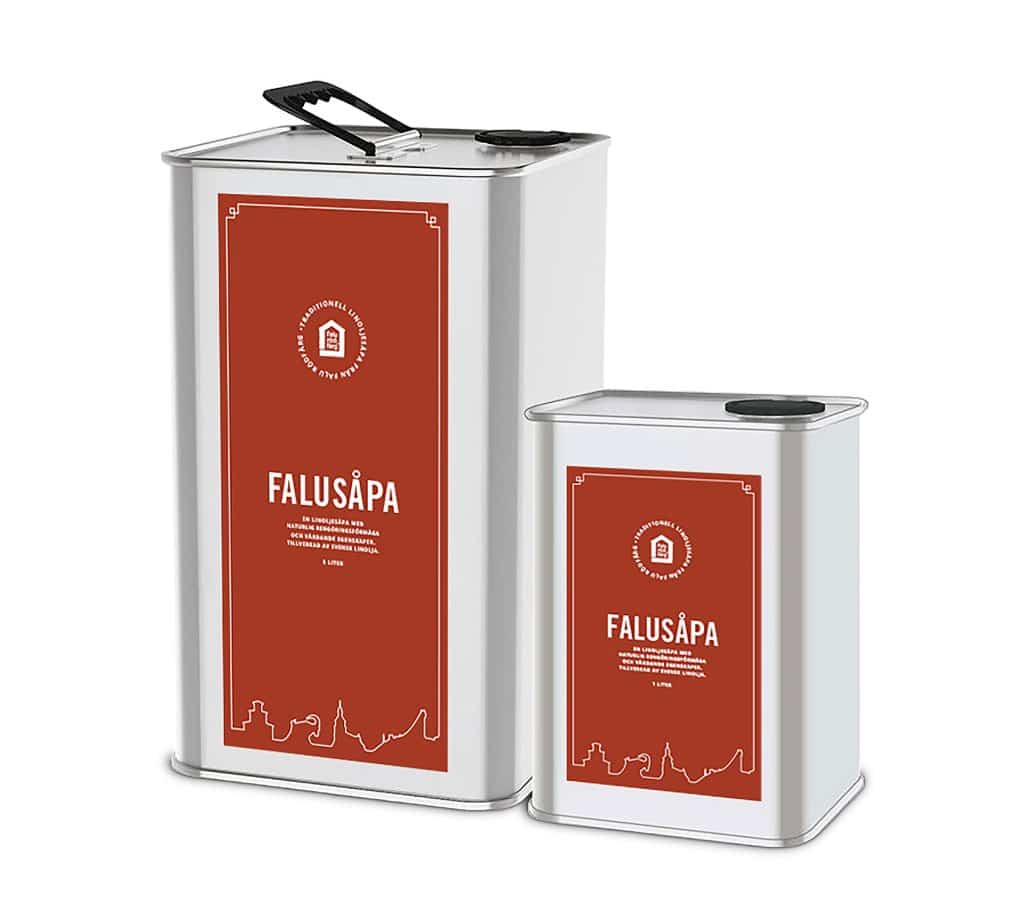
Cleaning decking and patios is a natural application for FALUSÅPA, but this versatile soap can be used on many different surfaces and for a wide range of purposes. You can use it for everything from floor treatment/scrubbed wooden floors, brush cleaning and stain removal to cleaning tiles, ceramic flooring, kitchen worktops and most other surfaces around the home. Its mild yet effective cleaning ability makes it suitable for both everyday cleaning and more thorough cleaning, depending on the dilution used. Use with care on surfaces painted with linseed oil paint.
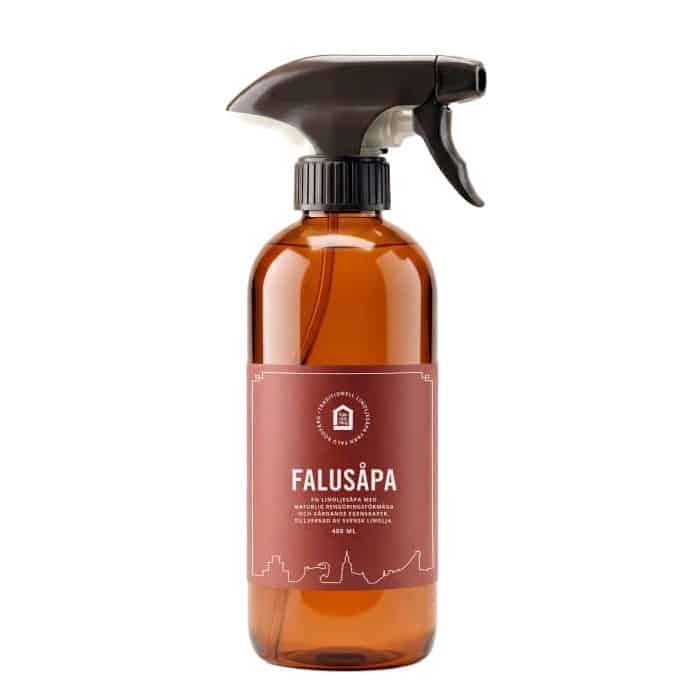
FALUSÅPA Spray is a lightly fragranced all-purpose cleaner that dissolves grease and dirt on most surfaces – from kitchen worktops and tables to tiles, walls and doors. The ready-to-use formula makes it easy to clean surfaces quickly in everyday life, while also being suitable for more thorough cleaning. Use with care on surfaces painted with linseed oil paint.
15–30% saponified linseed oil (anionic surfactants)
Approx. 11
<5% saponified linseed oil (anionic surfactants), <0.01% fragrance
Approx. 10
For cleaning kitchen worktops, hobs, extractor hoods, tiles, washbasins, toilets, etc.
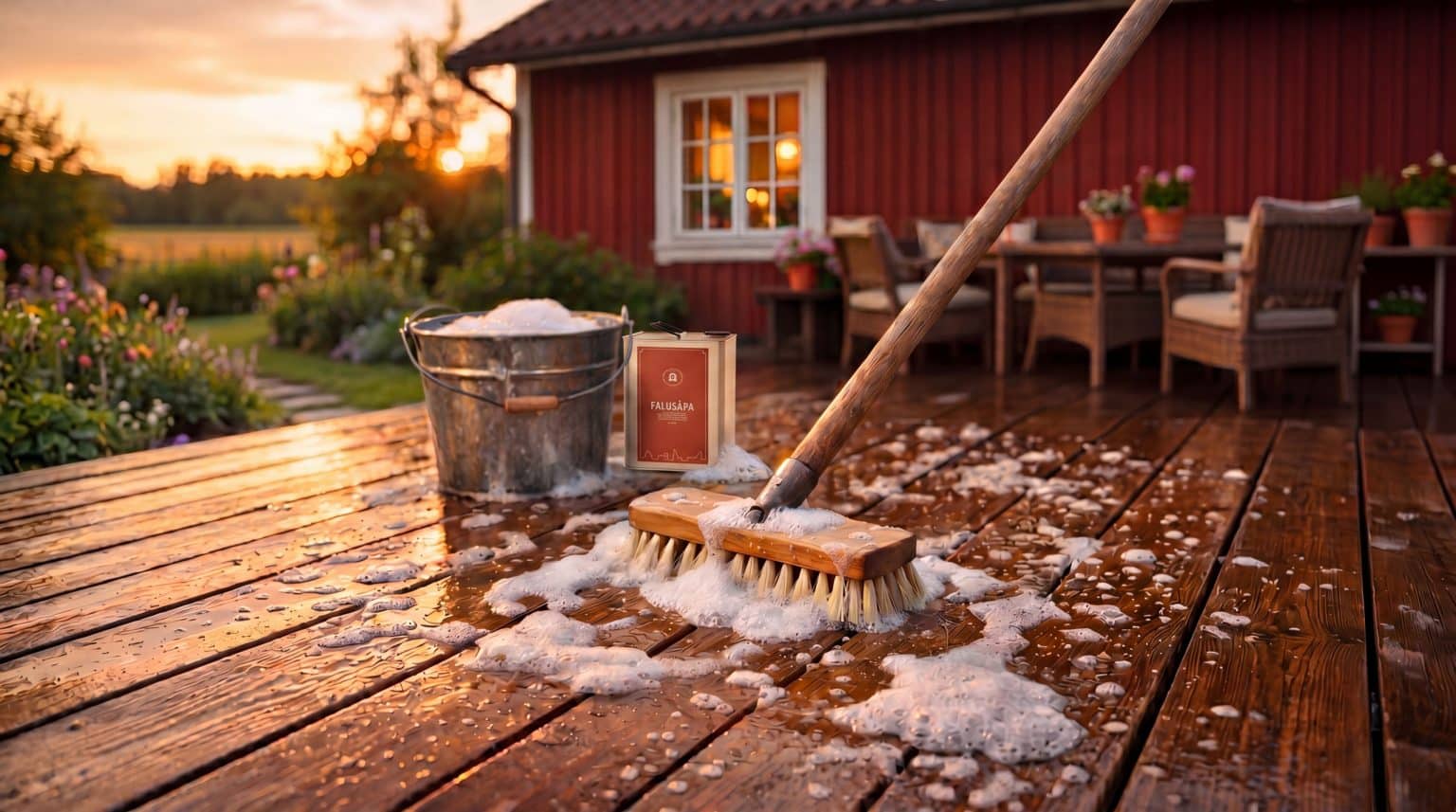
When installing a new untreated wooden floor, soap scrubbing can be an alternative treatment. It is an effective way to speed up the process of creating a durable, easy-to-maintain floor. Over time, the floor develops into a light-coloured, hard-wearing and comfortable surface. The result does not come overnight, but after a couple of years of regular scrubbing you will have a classic scrubbed floor that ages beautifully and requires minimal maintenance.
Linseed oil soap leaves a dirt-repellent and protective surface that becomes stronger after repeated treatments. It also adds saponified oils to the treated material. The floor gradually lightens over time as it is cleaned.
FALUSÅPA is available from many of our regular retailers. Please contact the store in advance to ensure that it is in stock. In addition to physical stores, FALUSÅPA can also be ordered online in our webshop (within Sweden only).
You can use the soap for cleaning all types of floors. Vinyl floors and click-lock floors that do not absorb moisture require less soap.
If too much is used, a film may remain, which can be removed with water.
Concentrated FALUSÅPA has a balanced fatty acid content, reducing the risk of excess grease remaining on the surface.
With the spray version, overdosing is difficult.
Recommendation for FALUSÅPA Spray: “Wipe dry afterwards for an extra-fine finish.”
Yes. The soap is alkaline and does not damage natural stone in the way acidic cleaners can.
Yes. Soap is alkaline and dissolves grease and biological dirt (soap residue and skin deposits). Concentrated soap and a stiff brush work excellently for cleaning grout.
Soap does not dissolve limescale deposits.
Yes, absolutely. Your decking will become pleasant to walk on, with a smooth surface that is easier to keep clean. Pollen and dust will not stick as easily as they can on oily or greasy surfaces.
Yes, absolutely.
The surface will become smoother and easier to keep clean.
It depends on the wood species, condition and degree of soiling. Porous, dried-out boards absorb more soap than new pressure-treated boards.
One litre of soap is usually enough to clean approximately 30 m² of decking. Dilute according to the label instructions.
Yes. Soap is a soap product, not an oil, impregnation or paint. If you wish to oil the decking, make sure any soap residue is rinsed away first.
FALUSÅPA is not superfatted. Superfatted soap contains excess unsaponified fat. This means that treated surfaces receive an excess of non-drying fat.
While this may be beneficial for skin, it can attract dirt and pollen on treated surfaces, encouraging biological growth.
No, as long as the soap is absorbed into the wood.
If the soap remains on the surface instead of being absorbed, the wood is saturated and any excess should be removed with water.
No. Thanks to its high pH value, the soap has no best-before date.
If stored for a long period it may separate, but simply turn or shake the container a few times to restore a homogeneous consistency.
Yes.
Soap that has frozen may separate. To restore a homogeneous consistency, place the container in warm water and then shake it thoroughly.